I’ve been running a simple experiment: taking real photos from my life and recreating them with AI to see how convincing the results can be.
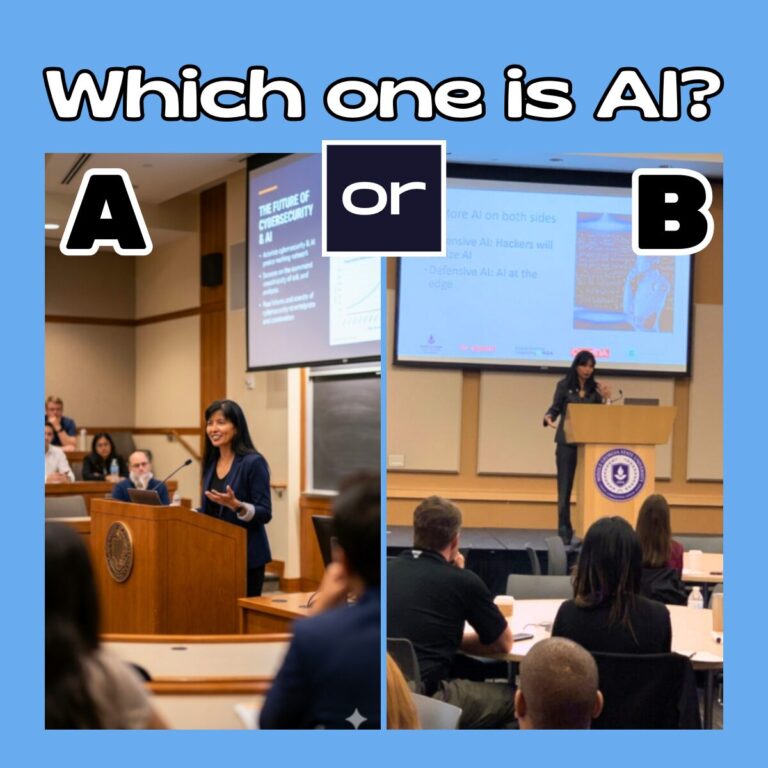
In this case, the setting is a university lecture hall. Below are two images of me speaking at a podium about the future of cybersecurity and AI. One photo is real. The other was generated using AI.
Take a moment to look closely before scrolling.
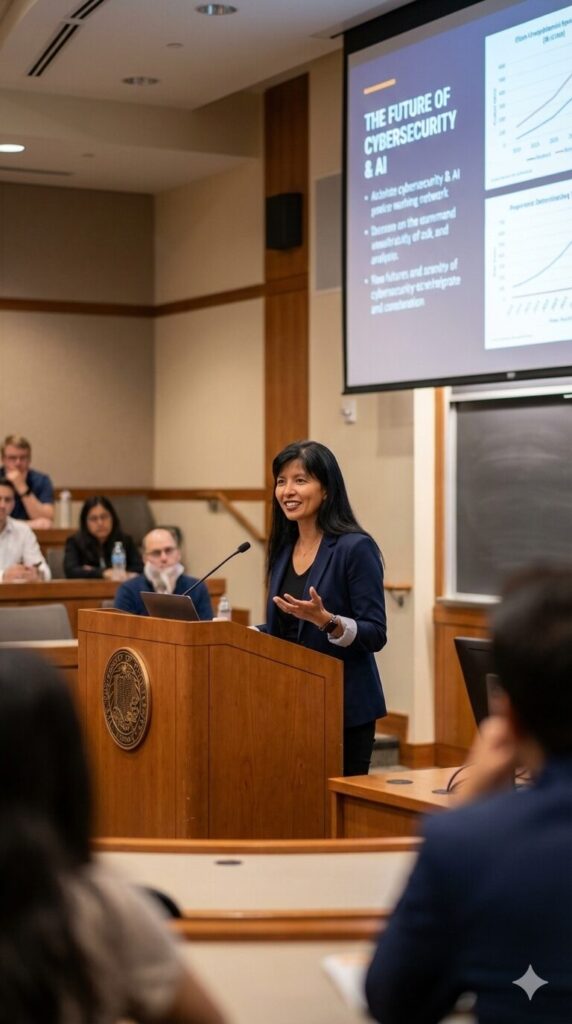
AI Image Generated by Gemini
Prompt:
Transform this modern headshot into a realistic photo of me giving a keynote-style talk at a university about the future of cybersecurity and AI.
Subject is standing behind a podium in a university lecture hall or auditorium. Confident, engaged posture. Natural hand gestures consistent with speaking. Professional but approachable expression.
Outfit should reflect realistic professional speaking attire suitable for a university or academic conference. No exaggerated styling.
Background should include a real academic setting: a podium with a university seal, projection screen or presentation slides behind me, and an audience seated in front. Slides should appear realistic and readable but not overly detailed.
Lighting should match indoor lecture hall lighting. Shot by an event photographer from the audience perspective using a moderate telephoto lens. Slight depth of field with the speaker in focus and the audience softly blurred.
Maintain accurate facial features, anatomy, and proportions. Natural arm positions. No extra limbs. No distorted hands. No floating objects.
Prioritize realism over dramatization. Avoid cinematic lighting, exaggerated stage effects, fantasy elements, or overly polished rendering. Podium should resemble those used in university auditoriums, with a simple emblem or seal, not corporate branding. This should look like a candid photo captured mid-talk, not a posed promotional photo.

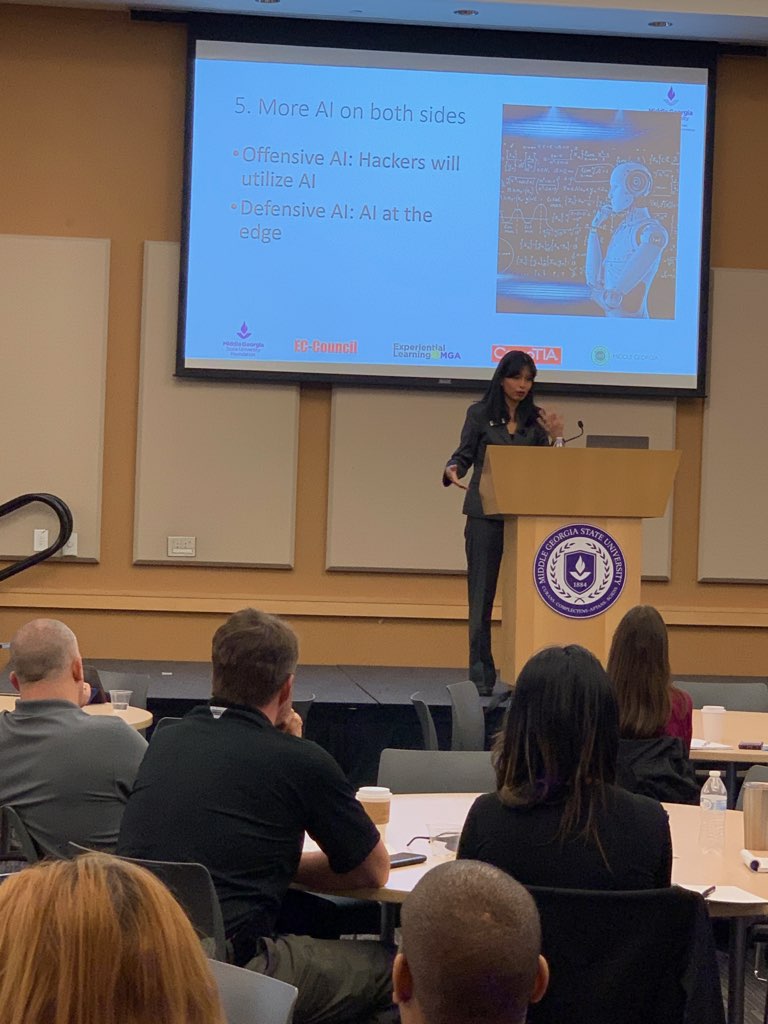
In March 2020, I was invited to speak at Middle Georgia State University for their Innovations in IT and Cybersecurity conference. During that talk, I shared my top 10 predictions about the future of cybersecurity, including how AI would increasingly shape both offensive and defensive security strategies.
Looking back, the slide behind me in the real photo, which focuses on AI and cybersecurity, feels somewhat fortuitous. Five years later, AI has become a central part of everyday technology, security tooling, and public conversation in ways that were only just starting to emerge at the time.
If you’re curious, the full talk is available below:
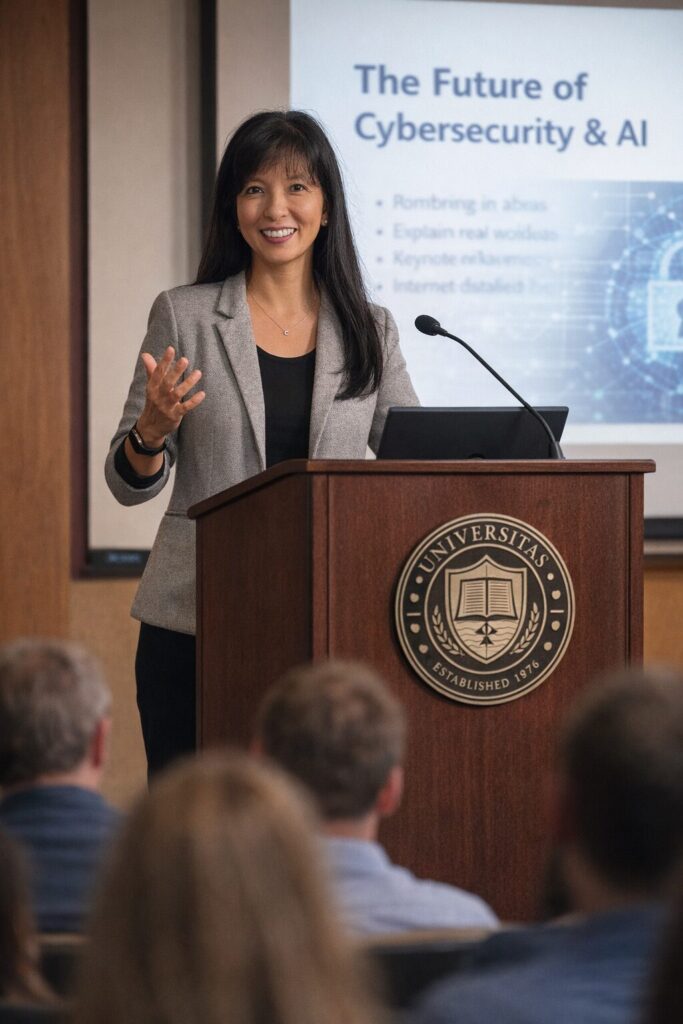
AI Image Generated by ChatGPT
Prompt:
Transform this modern headshot into a realistic photo of me giving a keynote-style talk at a university about the future of cybersecurity and AI.
Subject is standing behind a podium in a university lecture hall or auditorium. Confident, engaged posture. Natural hand gestures consistent with speaking. Professional but approachable expression.
Outfit should reflect realistic professional speaking attire suitable for a university or academic conference. No exaggerated styling.
Background should include a real academic setting: a podium with a university seal, projection screen or presentation slides behind me, and an audience seated in front. Slides should appear realistic and readable but not overly detailed.
Lighting should match indoor lecture hall lighting. Shot by an event photographer from the audience perspective using a moderate telephoto lens. Slight depth of field with the speaker in focus and the audience softly blurred.
Maintain accurate facial features, anatomy, and proportions. Natural arm positions. No extra limbs. No distorted hands. No floating objects.
Prioritize realism over dramatization. Avoid cinematic lighting, exaggerated stage effects, fantasy elements, or overly polished rendering. Podium should resemble those used in university auditoriums, with a simple emblem or seal, not corporate branding. This should look like a candid photo captured mid-talk, not a posed promotional photo.
This post is part of my ongoing AI vs. Reality series, where I compare real photos with AI recreations to explore how perception, context, and confidence shape what we believe online.